



Business & Economics
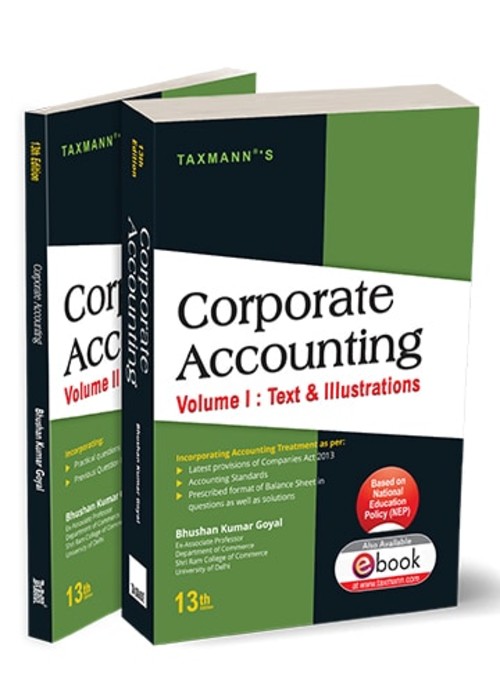
Taxmann’s Corporate Accounting (NEP) – Comprehensive Two-volume Textbook that Integrates Company Law
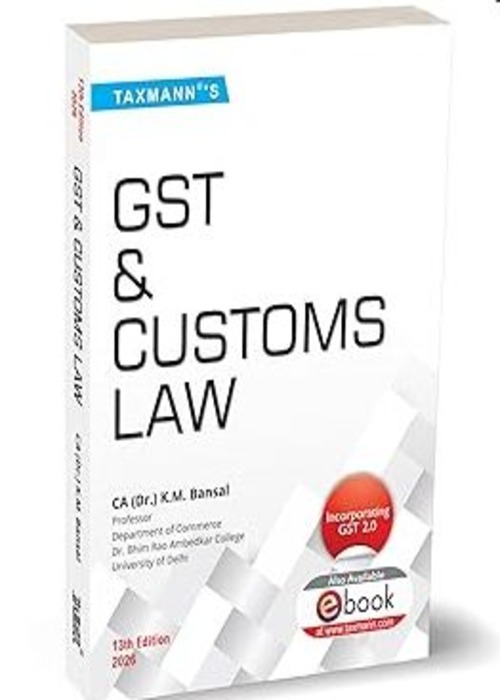
Taxmann’s GST & Customs Law Textbook with GST 2.0 Reforms
The contents and the structure of the book are as follows:
- Part I – Goods and Services Tax (GST) o Evolution of indirect taxes in India and the constitutional foundation of GST o GST governance structure and legislative framework o Meaning and scope of Supply, including composite and mixed supplies o Levy and collection of GST o Place of Supply, Time of Supply, and Value of Supply o Input Tax Credit (ITC): § Eligibility and ineligibility § Blocked credits under section 17(5) § Apportionment and reversals (including Rule 42 methodology) § Capital goods and special circumstances o Reverse Charge Mechanism (RCM) explained through statutory logic and practical illustrations o Tax invoices, credit notes, debit notes, receipts and refund vouchers o E-Way Bills and E-Invoicing, including IRN generation, QR codes, and portal integration o Returns architecture and payment of tax, with an explanation of electronic ledgers o GST implications for e-commerce and electronic commerce operators o GST 2.0 Reforms: § Structural corrections § Rate rationalisation and notification-based implementation § Ease-of-compliance measures, such as pre-filled returns and automated refunds § Policy significance and future direction of GST
- Part II – Customs Law o Fundamental concepts and scope of Customs Law o Territorial waters, customs waters, and jurisdictional applicability o Types of Customs Duties, including surcharge and IGST linkage o Valuation under Customs, supported by step-by-step computational illustrations o Practical relevance of Customs provisions in import/export transactions